“WE ARE HOME”: PUEBLO OF POJOAQUE WELCOMES BACK POTTERY AFTER 123 YEARS
PUEBLO OF POJOAQUE, N.M. — The Pueblo of Pojoaque is bringing its pottery home. Eight pots from Pojoaque and
shipped away in 1903 have been returned to the Pueblo through work led by the Poeh Cultural Center, Tribal
Historic Preservation Office, tribal members including elders, youth. The Pueblo identified the pots in a
photograph taken at Pojoaque on July 25, 1903, which shows then Governor Antonio Tapia Montoya and tribal
members with twelve pots, alongside the visiting collector George H. Pepper. Eight of those twelve pots now
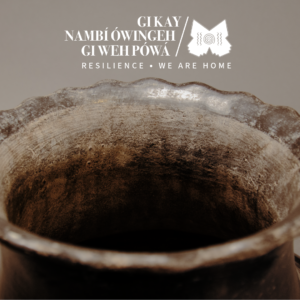
return permanently as the center of a new exhibition at the Poeh Cultural Center titled Gi Kay Nambí Ówingeh
Gi Weh Pówá, which in the Tewa language means Resilience, We Are Home. The exhibition celebrates the
resilience of the Pueblo of Pojoaque to retain and reclaim its cultural heritage, and to share that heritage with
others.
“These vessels have been away from Pojoaque for well over a century,” said Governor Jenelle Roybal of the
Pueblo of Pojoaque. “Their return home is a profound act of justice for our people, and a moment of deep pride
for every generation of our Pueblo.”
In 1903, Pepper, an anthropologist, traveled through northern New Mexico on an expedition to collect Native
American objects for museum collections. While at the Pueblo of Pojoaque, he acquired pottery that later
entered the collections of the American Museum of Natural History in New York City and the Phoebe A.
Hearst Museum of Anthropology at the University of California, Berkeley. Pepper documented his work in
journals and photographs, and that record ultimately helped the Pueblo find the pots and bring them home.
Tribal members recall first seeing the pots when the expedition photograph was published in Then and Now, a
1991 book documenting the Pueblo of Pojoaque’s cultural history.
Pottery is central to the culture and history of the Pueblo of Pojoaque. Clay represents the generations who
came before, the generations living now, and the generations yet to be born, and each pot carries the memory
of the potter who made it and the people who used it. Clay is gathered with thanks when it is needed and
shaped to meet the changing needs of potters, their families and their communities. Needs change with the
times, but the clay remains constant.
“This is the staple of how we survived, how we stored our food. We didn’t have a refrigerator; this is how we
carried our water,” said Pojoaque potter Glenn Gomez. “They may have even washed their hands in them.”
The Poeh had already begun bringing Tewa-made objects back to Tewa Country in 2019 with the
groundbreaking exhibition Di Wae Powa (They Came Back), a partnership between the Pueblo of Pojoaque
and the Smithsonian’s National Museum of the American Indian that returned more than 100 pots of Tewa
origin to Tewa Country through a long-term loan. Of those pots, only one historic vessel came from the Pueblo
of Pojoaque. That discovery prompted the Pueblo to search for more of its historic belongings, and the 1903
photograph provided the evidence to begin. Guided by the Pojoaque Tribal Council, the Poeh focused first on
the pots from 1903.
The Native American Graves Protection and Repatriation Act (NAGPRA) requires museums holding Native
American objects to inventory their collections and share those inventories with tribes. Poeh staff, Pojoaque
elders, youth, traditional leaders and the Tribal Historic Preservation Officer requested and reviewed
inventories from museums holding Pueblo of Pojoaque objects, and the search led to pottery at both the
American Museum of Natural History and the Hearst Museum. Tribal members, including elders and youth,
traveled with Poeh staff to both institutions for emotional reunions with pots that had left the Pueblo more than
a century earlier. The Pueblo then formally requested their return.
Museums have historically been reluctant to release objects from their collections, even when those objects
belong with their communities of origin. Through a series of conversations with museum staff, both
institutions agreed to return the pots. UC Berkeley returned four pots through the NAGPRA repatriation
process, and the American Museum of Natural History returned the other four through an Ethical Return. Once
the agreements were final, the pots were carefully packed, and a truck carrying the four New York pots crossed
the country to the Hearst Museum, where all eight were reunited before the final leg of their journey to
Pojoaque. From coast to coast, the pots came home, and their return shows the Pueblo of Pojoaque’s
commitment to working with museums, even in historically difficult circumstances, to bring objects back to
their communities in a spirit of sharing knowledge.
“I am deeply grateful to the American Museum of Natural History and the University of California, Berkeley
for working with the Pueblo to bring these pots home,” said Karl Duncan, Museum Director at the Poeh
Cultural Center & Museum. “This return reflects a partnership that I hope will guide museums and Indigenous
nations, and I hope it marks the beginning of an ongoing relationship between the Pueblo of Pojoaque and
these institutions.”
Gi Kay Nambí Ówingeh Gi Weh Pówá opens to the public at 10:00 a.m. on Friday, October 16, 2026, at the
Poeh Cultural Center. The exhibition presents the eight returned pots in front of a large-scale reproduction of
the 1903 photograph, so visitors can see the same vessels in the image and in person. It is rare for so many
historic objects pictured in a single photograph to be located and returned to their tribe of origin. Four empty
pedestals stand beside them for the pots in the photograph that have not yet come home, a reminder that the
search for those four, and for other Pojoaque objects, continues.
“On October 16, we will welcome these pots back into our community with dance, food and demonstrations,”
said Governor Roybal. “We invite everyone to join us as we celebrate this homecoming.”
“If the pots could say anything, I think they would say kunda woha for not giving up on our traditions, for not
giving up on our language, for coming and bringing the language back to us,” said Hugo Lopez, a traditional
leader of the Pueblo of Pojoaque. “Who knows the last time they heard a Tewa prayer. I think their eyes are
watery, their ears are full and they are so proud of us.”
Twelve pots left Pojoaque in 1903. Through the determination of its people, the Pueblo of Pojoaque has
brought eight of them home, where they stand in front of the photograph that once recorded their leaving,
surrounded by descendants of the people who made and used them. Gi Kay Nambí Ówingeh Gi Weh Pówá is
meant to give every member of the Pueblo a sense of pride in a resilience that outlasted 123 years of distance,
and to let the pots say for themselves: We Are Home.
Exhibition opening: Friday, October 16, 2026, 10:00 a.m.
Location: Poeh Cultural Center & Museum, 78 Cities of Gold Road, Santa Fe, NM 87506
Admission: Free and open to the public, with a celebration featuring dance, food & demonstrations
Media contact: Cheyenne Duran, cheyeneed@pojoaque.org | (505) 455-3331 ext. 5056
About the Poeh Cultural Center & Museum
The Poeh Cultural Center & Museum is a center of the Pueblo of Pojoaque. In the Tewa language, Poeh means
“path,” and the Center carries that meaning into its daily work: passing Pueblo arts, knowledge and traditions
from one generation to the next, and sharing them with the world. The Poeh stewards historic and
contemporary collections of Pueblo art, presents exhibitions rooted in Tewa perspectives, and teaches the
traditional arts to a new generation of Pueblo artists. It leads the way in bringing ancestral objects home,
through the landmark Di Wae Powa partnership with the Smithsonian’s National Museum of the American
Indian and the return of Pojoaque pottery from museums across the country. The Poeh also presents the annual
Pathways Indigenous Arts Festival. It is located at 78 Cities of Gold Road, Santa Fe, NM 87506. Learn more at
poehcenter.org.

